
PREPARE THE DUCK
For really crisp skin, start the day before. Pat the duck completely dry, then leave it uncovered in the fridge for around 24 hours. This helps dry the skin and gives you a much better finish when it hits the heat.
Before cooking, prick the skin all over with a skewer or the tip of a sharp knife, making lots of tiny holes without piercing deeply into the meat. This helps the fat render as the duck turns.
Rub with a very thin coating of oil and season generously with sea salt.
SET UP YOUR EGG
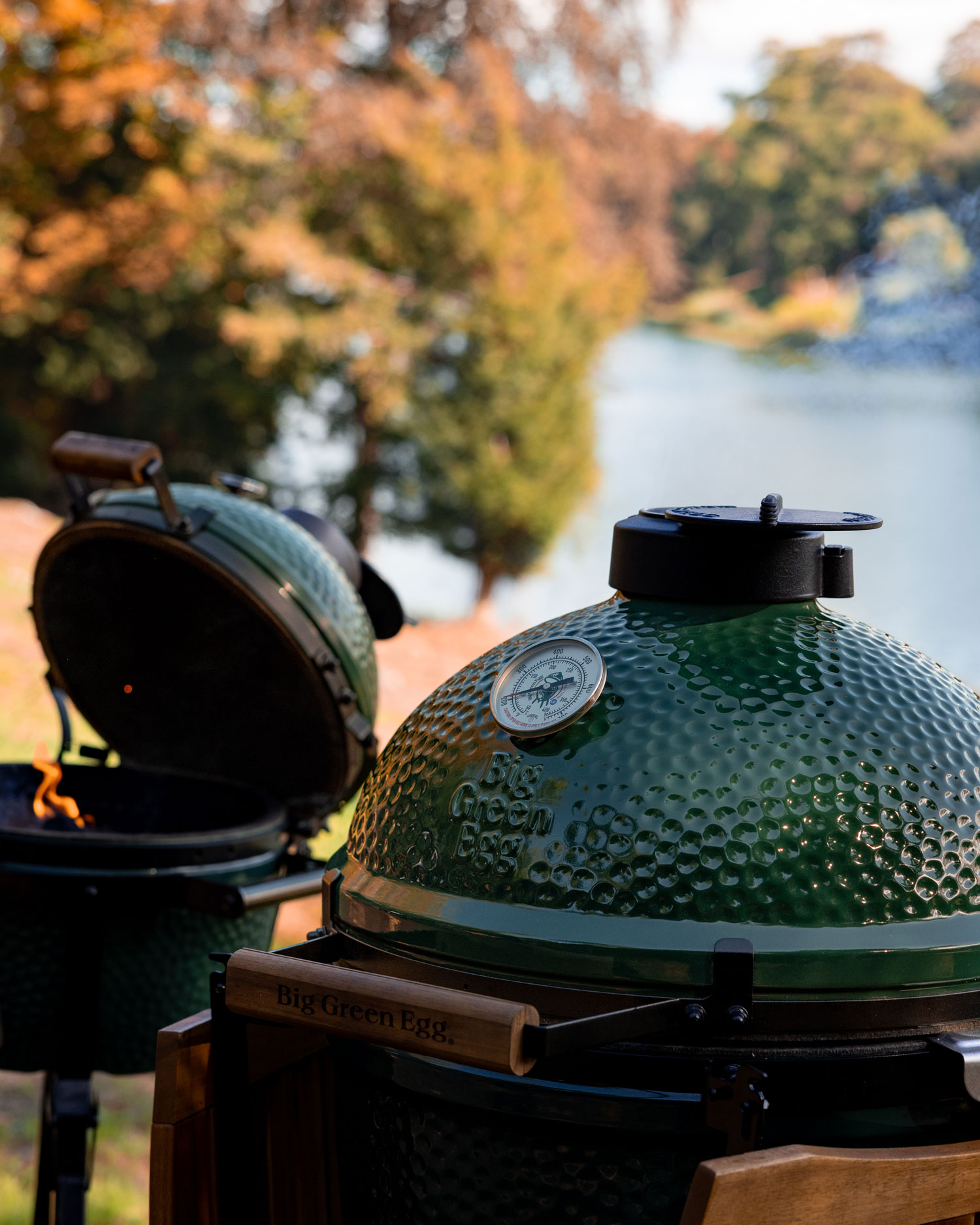
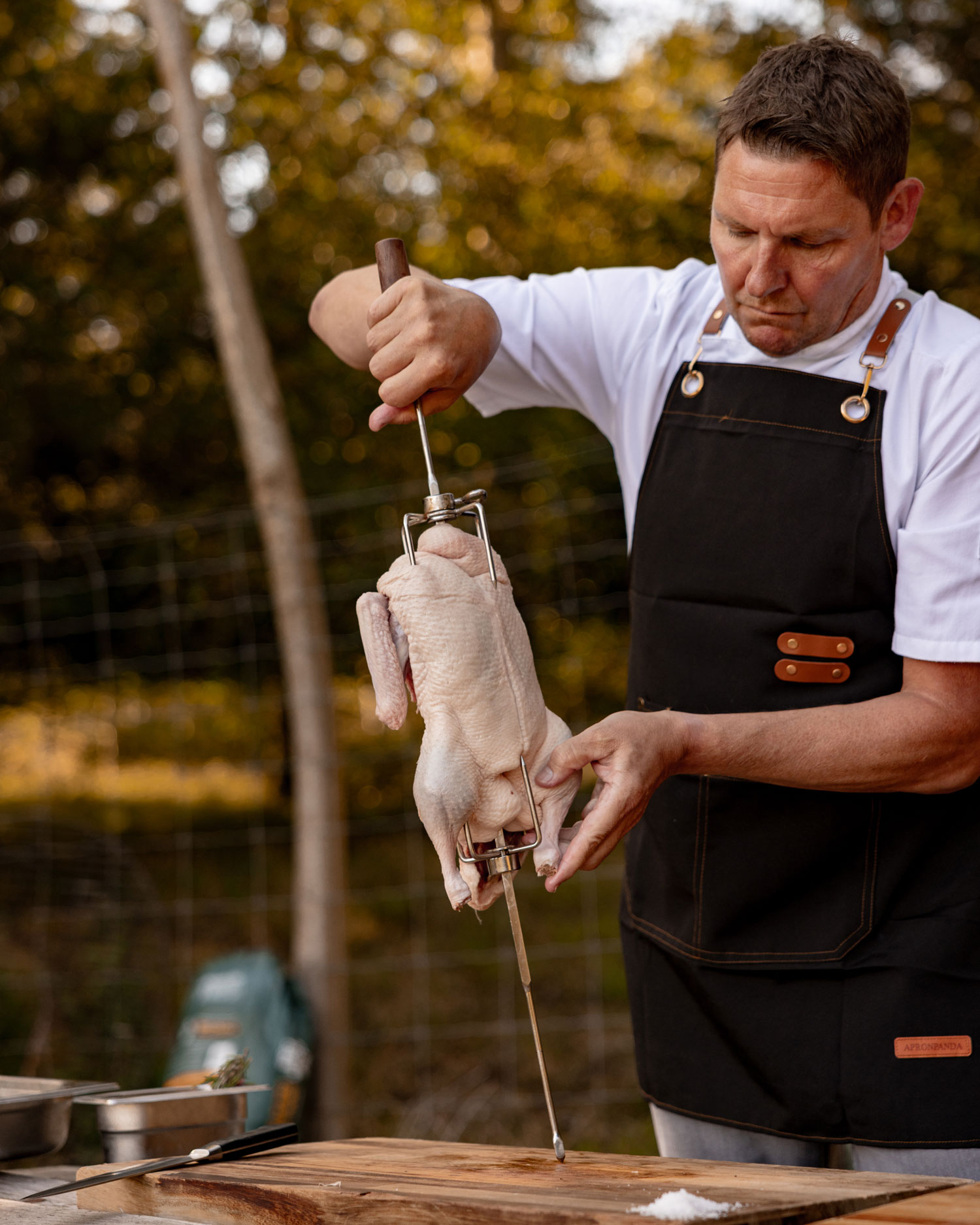
Set up your EGG for direct rotisserie cooking. The target temperature is 180°C-200°C. Remove the top fork from the Rotisserie spit. Skewer the duck onto the spit and fix it onto the bottom fork, making sure it’s centred and well balanced. Add the top fork and tighten the wing screws at both ends to secure.
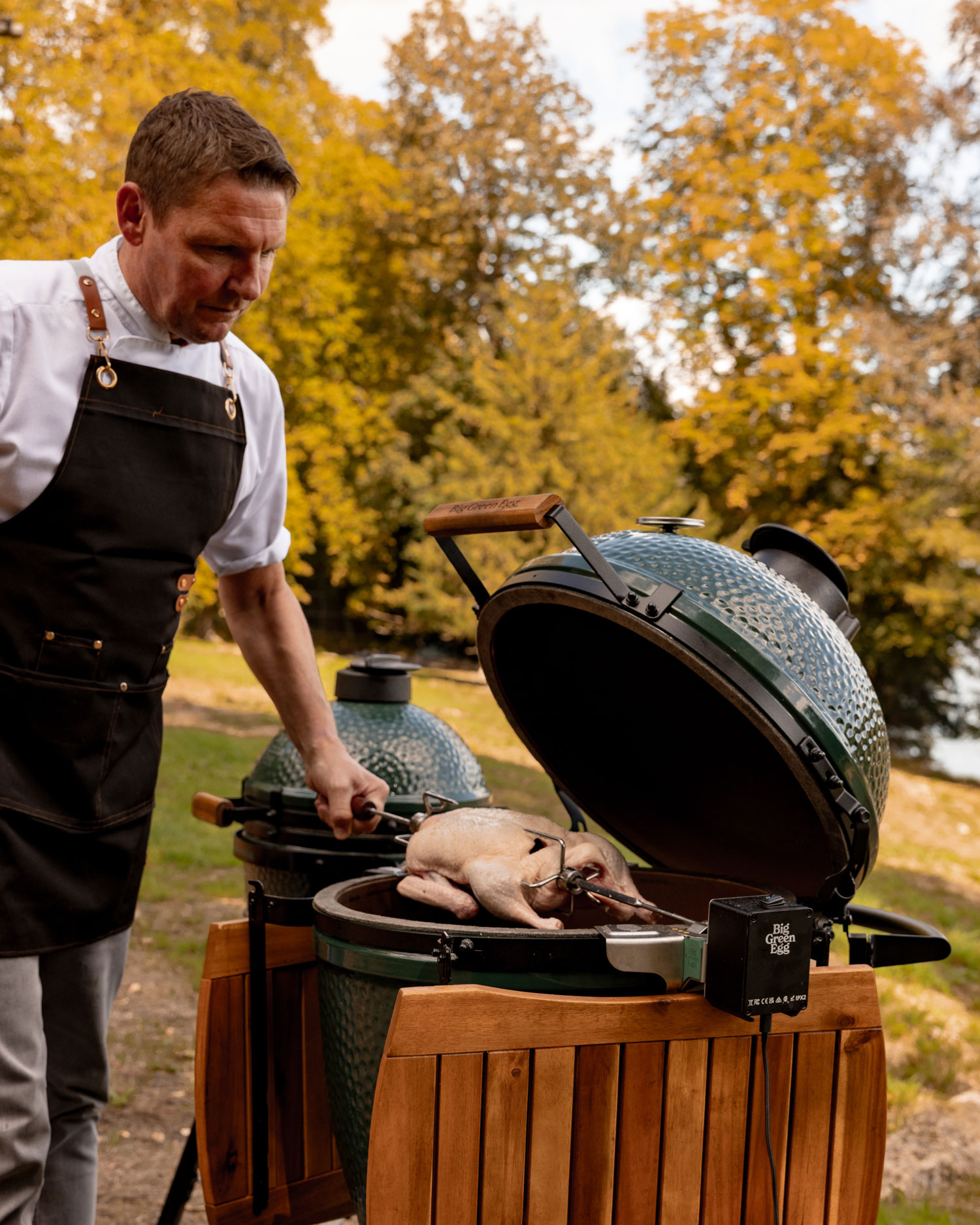
Install the spit, turn on the Rotisserie motor and watch the duck rotate. After a couple of full rotations, check that everything is secure, then close the Dome.
COOK THE DUCK
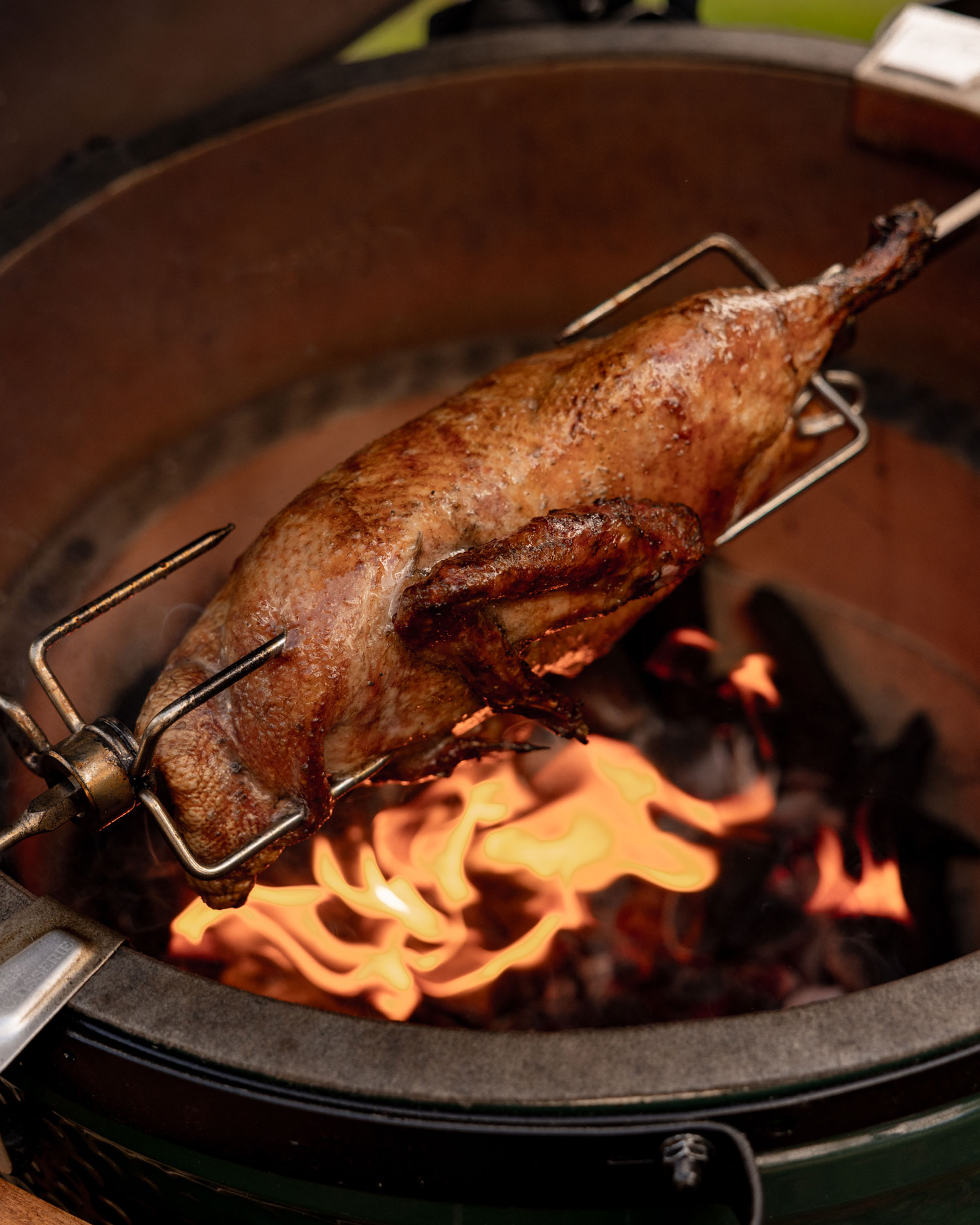
Cook for around 45-60 minutes, depending on the size of the bird. Try not to open the EGG too often, as keeping the temperature stable allows the fat to render slowly while the skin crisps.
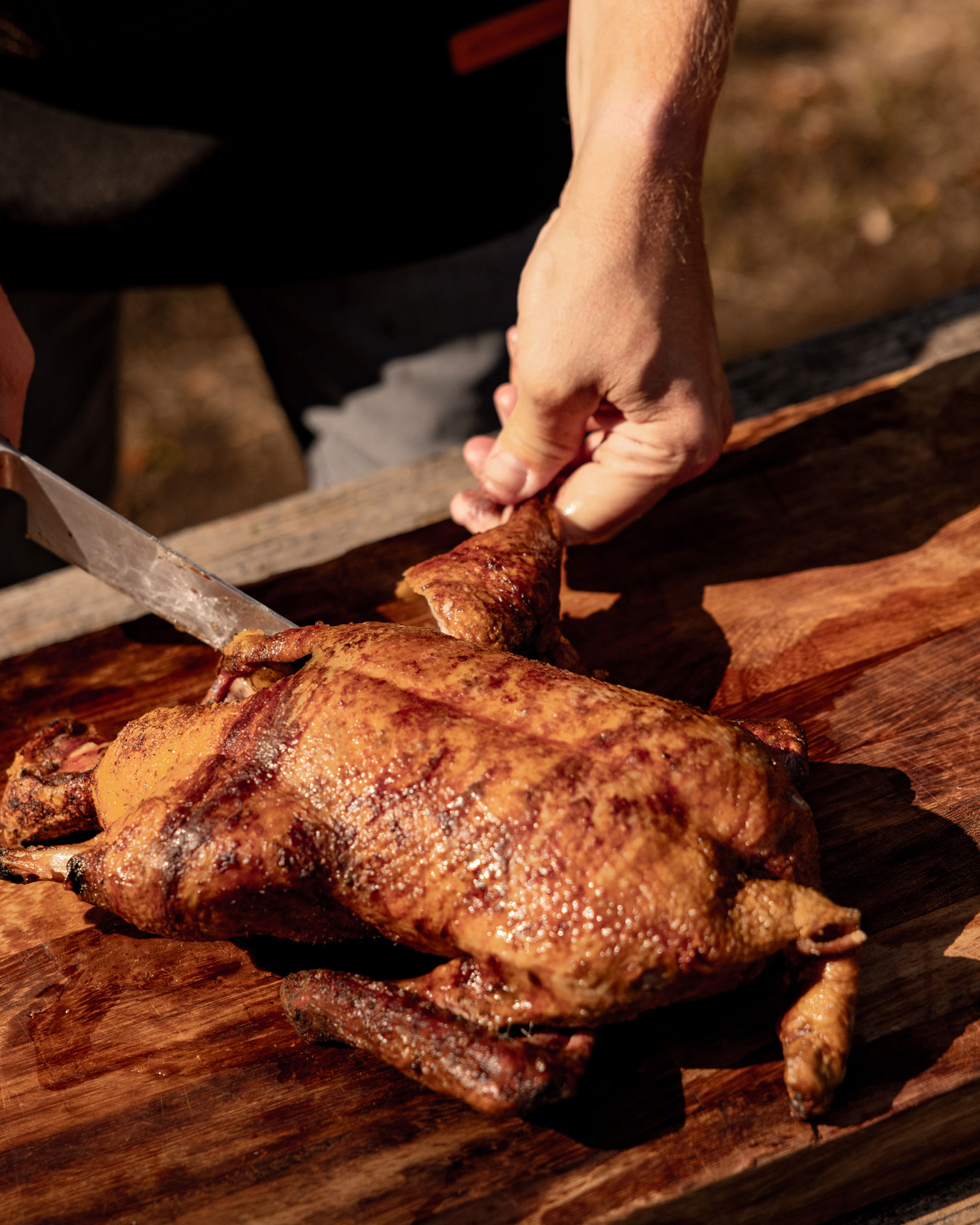
Once the thickest part of the leg reaches an internal temperature of 74°C, carefully remove the duck from the Rotisserie and leave it to rest for 20 minutes before carving.
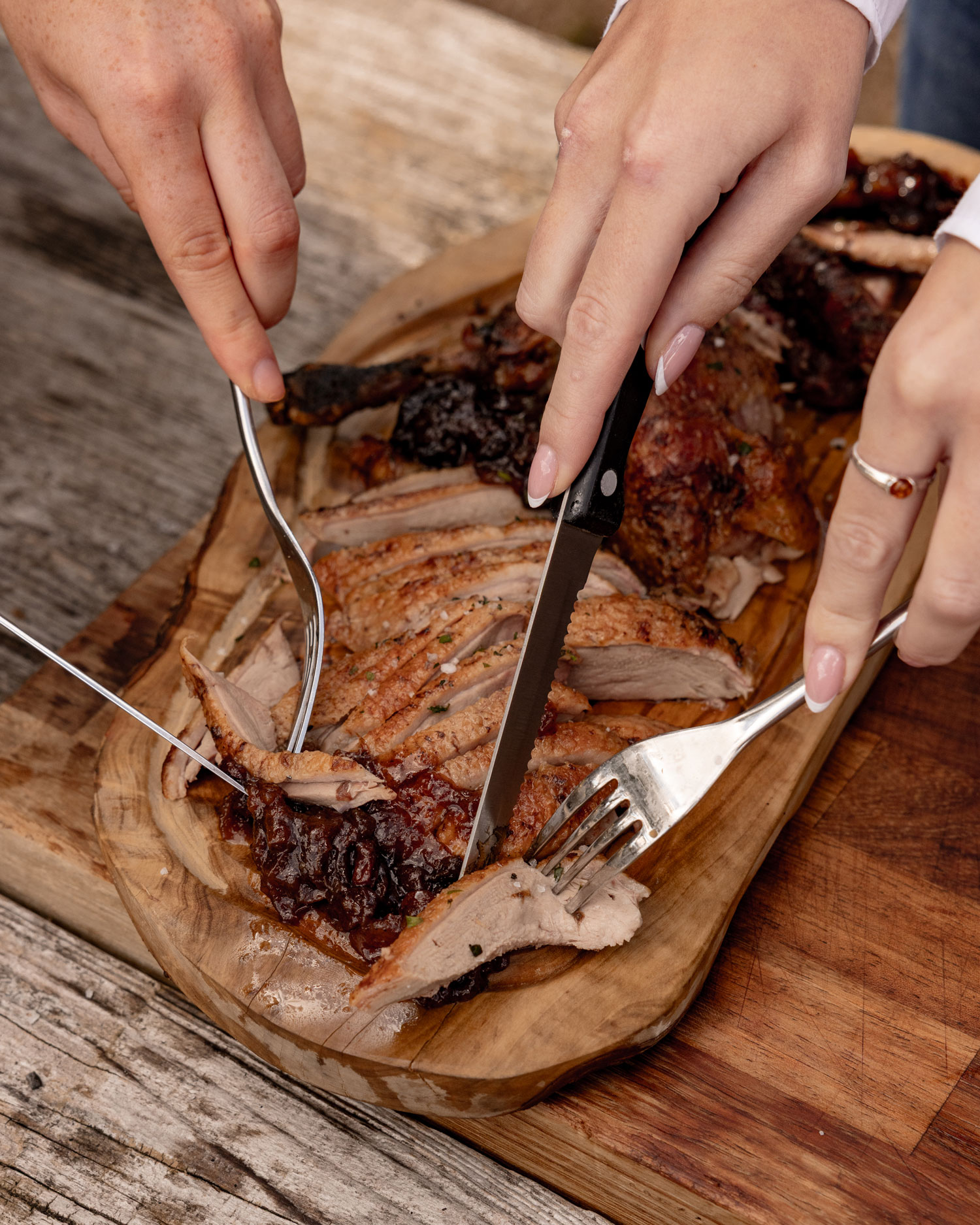
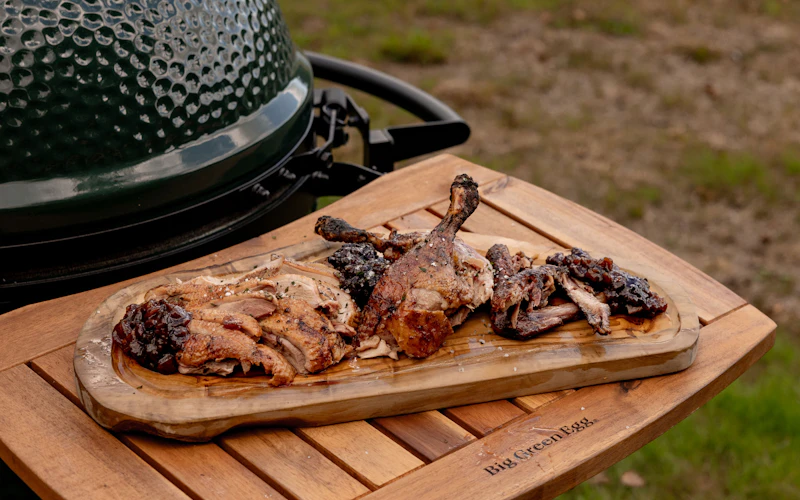
Serve with plenty of plum chutney on the side.