
OVERVIEW
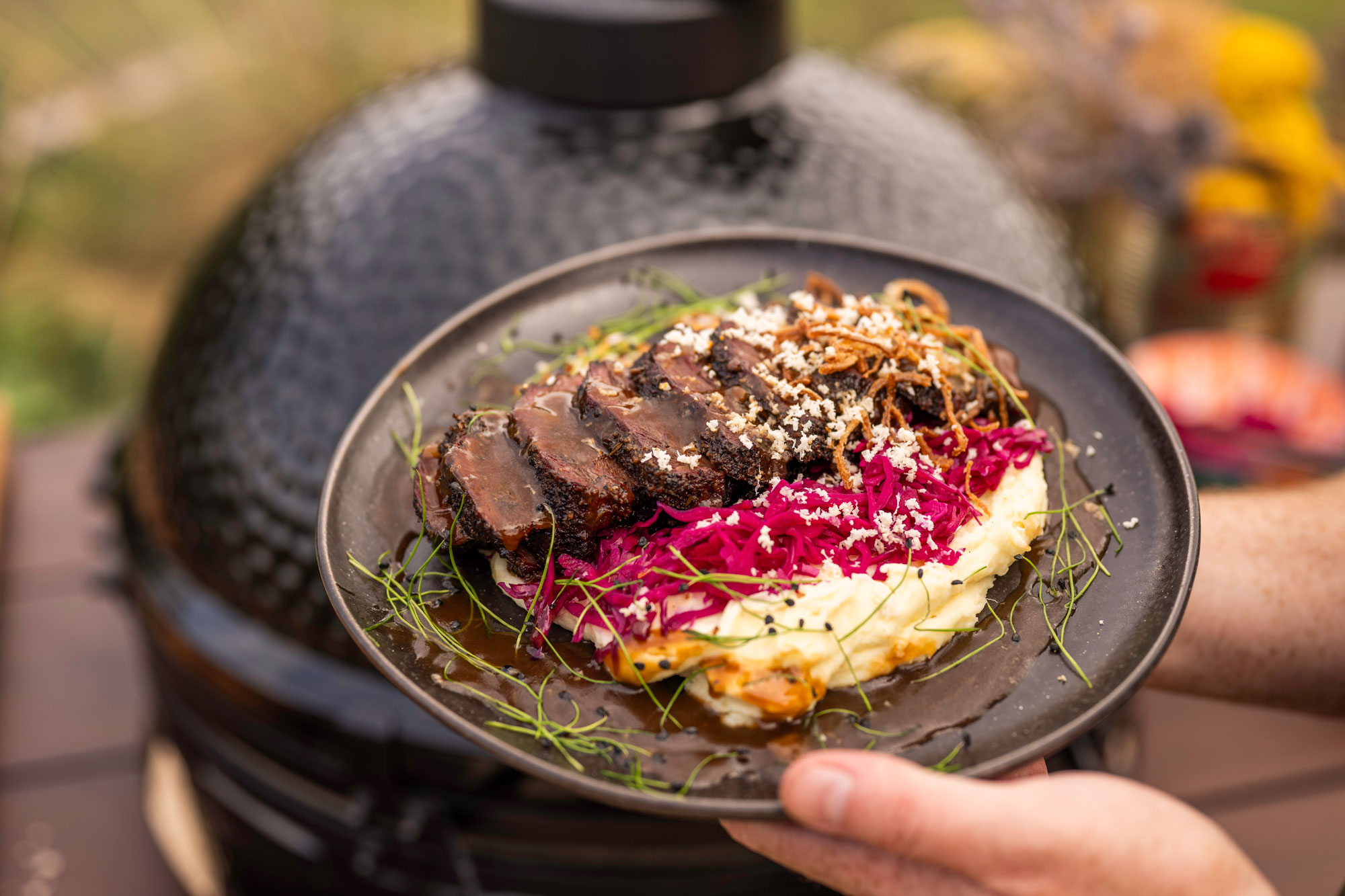
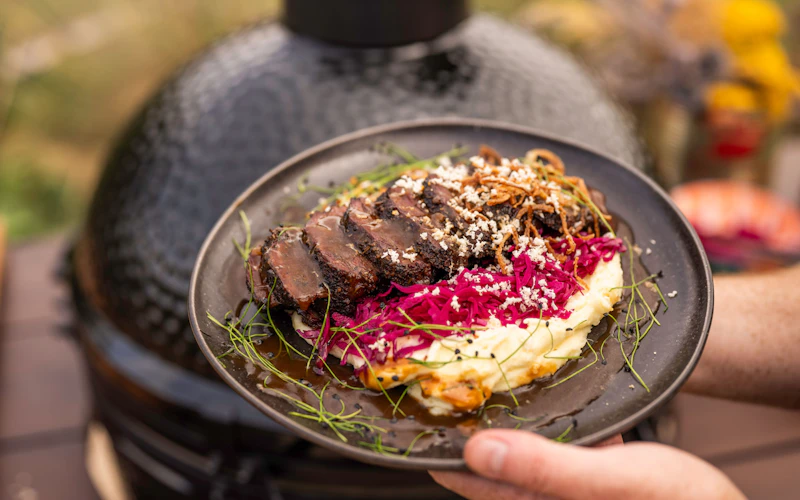
For such a refined dish, the method of cooking it is straightforward. Ox cheek gets a spell of smoke on the EGG first to build flavour into the surface, then goes low and slow into a braise until soft enough to fall apart at the touch of a spoon. Sliced and set on silky mash with a glossy jus, crispy shallots for crunch and a shower of fresh horseradish, the result is a restaurant-style plate – but almost everything happens unattended. A scattering of quick-pickled red cabbage brings sharp acidity and a pop of vivid magenta against all that rich brown, cutting through the dish without weighing it down the way a slow-braised cabbage would.
MAKE THE PICKLE
Ahead of time, pickle the red cabbage. Pack the shaved cabbage tightly into a jar or heatproof bowl. Bring the vinegar, sugar, salt, star anise (if using) and 100ml water to a simmer, stirring to dissolve the sugar, then pour the hot liquid over the cabbage. Leave to cool, then cover and refrigerate for at least 1-2 hours. The pickle keeps happily for several days and the colour gets more vivid with time.
Soak a handful of Apple Premium Woodchips – they can sit in water for anything from an hour to overnight.
SMOKE THE OX CHEEKS
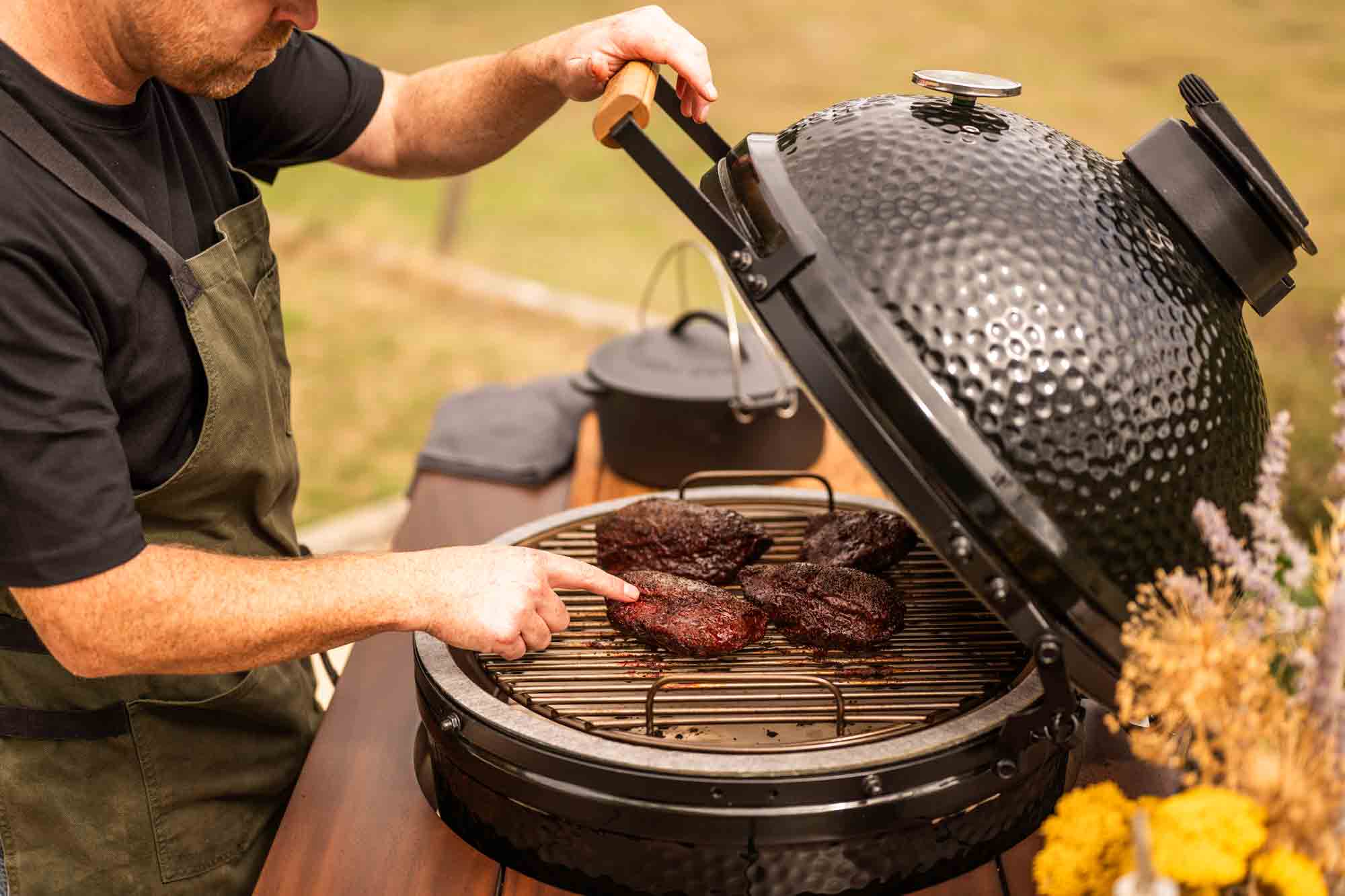
Load and light your EGG. Once the coals are good and hot, throw in the pre-soaked woodchips, then set up for indirect cooking. If you’re using the Dual Zone System, install the Dual Zone Basket with 2 x Half Moon Ceramic Deflectors at the lower level and 2 x Half Moon Stainless Steel Grids at the upper level. If you’re using the ConvEGGtor, install it in a legs-up position topped with the Stainless Steel Grid. The target temperature is 120°C.
Season the ox cheeks well with salt and pepper. Place directly on the grid and smoke for 60-90 minutes – enough to build a good smoky flavour and some light colour on the surface. They won’t be tender at this stage; that comes in the braise.
BUILD THE BRAISE
Bring the temperature up to 140°C-150°C. In a Cast Iron Dutch Oven, cook the bacon lardons until they’re starting to crisp, then add the onions, carrots and celery and cook for 8-10 minutes until softened. Stir in the garlic and tomato purée and cook for a further minute.
Add the ox cheeks to the pot. Pour in the red wine, bring to a bubble and let it reduce slightly, scraping up any browned bits. Add the beef stock, bay leaves and thyme.
BRAISE THE MEAT
Put the lid on the Dutch Oven. Close the Dome and braise for around 3½ hours, until the ox cheeks are completely tender and yield easily to a fork. Check occasionally and top up with a splash of water or stock if needed.
Lift the cheeks out carefully and keep warm, loosely covered. Strain the braising liquid through a fine sieve into a saucepan, pressing the vegetables to extract as much liquid as possible, then discard the solids.
REDUCE THE SAUCE
Switch to a direct setup by removing the Half Moon Ceramic Deflectors or ConvEGGtor. Simmer the strained liquid until it reduces to a glossy, sauce-like consistency, skimming any fat from the surface as it goes. If it needs more body, whisk in the cornflour mixture a little at a time until you reach the right consistency. Just before serving, whisk in the cold butter for shine and richness.
Boil the potatoes in well-salted water until completely tender, then drain well and pass through a ricer (or mash thoroughly) while still hot. Beat in the butter,then gradually work in the warm cream until silky and smooth. Season with salt and white pepper.
Toss the sliced shallots in the flour, shaking off any excess. Shallow fry in hot oil in batches until golden and crisp, then drain on kitchen paper and season with a little salt.
SERVE IT ALL UP
Spoon a generous swirl of mash onto each plate. Slice the ox cheeks and lay over the mash, then spoon the glossy beef jus over and around.
Scatter with crispy shallots, chopped parsley and chives, and finish with a shower of freshly shaved horseradish over the top. Add a small, neat pile of drained pickled red cabbage to one side of the plate – enough for a pop of colour and acidity, but not so much that it dominates the plate.